

If you own a modern diesel, you already know they can be absolute workhorses. But when the emissions equipment starts acting up, things can get expensive in a hurry.
DPF filters, EGR valves, DEF systems, sensors, and regeneration cycles all have their jobs. The trouble is, when one of these systems fails, it can affect how your truck or van runs, how much time it spends in the shop, and how much money comes out of your pocket.
That's why diesel delete kits get so much attention.
For off-road, competition, and other applications where emissions modifications are legally permitted, a delete kit can simplify the exhaust setup and remove some common sources of mechanical headaches.
So what's the actual benefit? Let's get into it.
More Horsepower and Better Throttle Response
One of the biggest reasons diesel owners look into delete kits is performance.
Factory emissions equipment is designed to reduce pollutants, not squeeze every last bit of horsepower out of your engine.
A restrictive or plugged DPF can create excessive exhaust backpressure, making it harder for the engine to move exhaust gases efficiently.
Removing that restriction in a permitted application, along with the right tuning, can help improve:
-
Horsepower and torque
-
Throttle response
-
Exhaust flow
-
Power delivery under load
And if you've ever driven a diesel that feels sluggish when you put your foot into it, you know how much difference a responsive engine can make.
Keep in mind: A delete pipe by itself isn't a horsepower upgrade. The actual gains depend on the engine, its condition, and the tuning that goes along with the hardware.
Better Fuel Mileage? It's Possible.
Nobody likes watching the fuel gauge drop, especially when you're driving a heavy-duty pickup or putting thousands of kilometres on a work van.
Modern diesels use a process called DPF regeneration to burn soot out of the particulate filter.
During certain regeneration cycles, the engine uses additional fuel to raise exhaust temperatures. That's normal, but frequent regenerations can affect fuel consumption.
In applications where deleting emissions equipment is permitted, eliminating those regeneration cycles may improve fuel economy.
There are a few things to remember, though.
-
Results vary depending on the vehicle and tuning.
-
Driving habits still make a big difference.
-
Bigger horsepower numbers don't automatically mean better mileage.
-
An engine that's already running efficiently may see little improvement.
The bottom line? Fuel savings are possible, but they're not guaranteed.
Fewer Emissions-Related Repair Bills
Here's where things get interesting, especially if you've owned a diesel long enough to deal with emissions-system problems.
A failed DPF, sticking EGR valve, DEF heater, or faulty NOx sensor can turn into a frustrating repair.
Sometimes it's one sensor. Sometimes it's a whole chain of problems.
And the worst part? You can spend a pile of money fixing one component only to have another issue pop up down the road.
Some of the common trouble spots include:
-
DPF (Diesel Particulate Filter): Can become restricted with soot or ash, eventually requiring cleaning or replacement.
-
EGR (Exhaust Gas Recirculation): Valves and coolers can suffer from carbon buildup, sticking, or leaks.
-
DEF (Diesel Exhaust Fluid): Pumps, heaters, injectors, and sensors can fail.
-
NOx sensors: Faults can trigger warning lights, emissions-system codes, or reduced-power conditions.
Removing these systems in a legally permitted application eliminates the need to repair those particular components.
That doesn't mean your diesel becomes maintenance-free. You've still got injectors, turbos, cooling systems, transmissions, and everything else to look after.
But it can mean fewer emissions-related components to worry about.
Less Downtime and Fewer Headaches
For somebody who uses their diesel as a daily driver, an unexpected repair is annoying.
For somebody running a work truck or delivery van, downtime can cost actual money.
Think about a Mercedes Sprinter that spends its days making deliveries, hauling tools, or travelling between job sites.
When the emissions system develops a fault, the vehicle may enter reduced-power mode or, in some cases, a countdown that restricts restarting.
Now you've got a van sitting in the shop instead of doing its job.
For dedicated off-road or other legally exempt vehicles, a properly configured delete setup can eliminate certain emissions-related shutdowns and restrictions.
And for a working fleet, avoiding even one unexpected breakdown can make a difference.
Of course, vehicles used on public roads still need to meet applicable emissions requirements. For those vehicles, proper diagnosis, maintenance, and compliant repairs are the way to keep downtime under control.
A Simpler Exhaust Setup
There's something to be said for keeping things simple.
Modern diesel exhaust systems can contain a combination of filters, catalysts, sensors, DEF injection components, and temperature-monitoring equipment.
Each component serves a purpose, but it also adds complexity.
In permitted off-road and competition applications, a delete exhaust can provide a more straightforward exhaust path with fewer emissions-system components.
Depending on the setup, that may mean:
-
Fewer components requiring inspection or replacement
-
Reduced exhaust restriction
-
Easier access to certain exhaust components
-
A different exhaust sound
It's not a cure-all, and a properly functioning factory system isn't automatically a problem. But for the right application, simplifying the exhaust can make maintenance more straightforward.
Mercedes Sprinter Owners: This One's for You
Let's talk Sprinters for a minute.
Mercedes Sprinter vans are everywhere for a reason. They're practical, capable, and built to put in the kilometres.
You'll find them running deliveries, carrying tools, hauling equipment, and travelling across the country as camper vans.
But when emissions-system problems start showing up, keeping one on the road can get expensive.
That's especially frustrating when the engine itself is still in good shape.
Why an All-in-One Kit Makes Sense
For a legally permitted off-road Sprinter build, buying separate exhaust components and then trying to figure out compatible tuning can be a hassle.
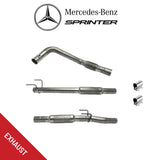
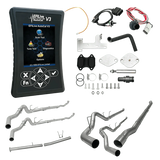
That's why we've put together our Mercedes Sprinter All-in-One Delete Kits.
Instead of hunting down individual components, you get a package built around the vehicle's engine and model year.
Depending on the kit, packages combine:
-
Vehicle-specific delete exhaust components
-
ECU tuning matched to the application
-
The required exhaust hardware supplied with the package
-
Available tuning options based on the engine and model year
Some Sprinter applications require bench flashing, where the ECU is removed and programmed rather than tuned through the diagnostic port.
We can help you figure out which setup applies to your vehicle before you order.
Mercedes Sprinter Kits Available at JS Speedshop

Mercedes / Freightliner / Dodge Sprinter 3.0L (2007–2009)
An all-in-one delete pipe and tuning package for earlier 3.0L diesel Sprinters, with bench-flash tuning information available.

Mercedes Sprinter 3.0L (2010–2018)
Our all-in-one Cat & DPF delete exhaust and tuning package, built around the 3.0L diesel platform.

Mercedes Sprinter 3.0L (2010–2023)
All-in-one DPF delete parts and tuning packages for supported configurations across these model years.
Mercedes Sprinter 3.0L (2019–2023)

Delete pipe and tuning packages for supported newer-generation 3.0L Sprinter applications.
Mercedes Sprinter 2.1L (2014–2021)

All-in-one delete pipe and tuning options for supported 2.1L four-cylinder diesel applications.
Model year alone doesn't tell the whole story. Engine configuration, ECU compatibility, and the actual exhaust layout all matter.
Make sure you're selecting the correct kit for your vehicle before ordering.
It's Not Just Mercedes: Cummins, Powerstroke & Duramax
Sprinters aren't the only diesels that can run into emissions-system trouble.
If you've spent any time around diesel pickups, you've probably heard somebody complain about a plugged DPF, an EGR issue, or a DEF system fault.
We carry diesel delete components and packages for supported applications across several popular platforms.
Ram Cummins
From work trucks to dedicated off-road builds, the 6.7L Cummins has a huge aftermarket following. Exhaust components and compatible tuning are important parts of many competition builds.
Ford Powerstroke
Whether it's a 6.7L Powerstroke or an older supported diesel platform, matching the correct hardware and tuning to the truck is key.
GM Duramax
Duramax owners have plenty of options for supported off-road and competition applications, including exhaust components and tuning packages.
Explore our Diesel Delete Kits Collection to see the available options.
Is a Diesel Delete Kit Worth It?
That depends on what you're building and where the vehicle will be used.
If you're putting together a dedicated competition truck or an off-road-only diesel where emissions modifications are legally permitted, a properly matched delete kit and tune may offer real advantages.
You could see better throttle response, improved exhaust flow, and fewer emissions-related components requiring maintenance.
But there are trade-offs.
Deleting emissions equipment increases harmful exhaust emissions, and removing or disabling that equipment is prohibited for many road-going vehicles. It can also affect warranty coverage, resale, inspections, and insurance.
And remember, a delete kit won't fix worn injectors, a failing turbo, or a mechanical issue inside the engine.
Good hardware, proper tuning, and a healthy engine still matter.
Find the Right Diesel Setup at JS Speedshop
Whether you're building a Cummins, Powerstroke, Duramax, or Mercedes Sprinter for a permitted off-road or competition application, getting the right parts the first time makes life easier.
At JS Speedshop, we carry diesel exhaust components, tuning solutions, and all-in-one packages for a range of supported vehicles.
Our Mercedes Sprinter all-in-one kits are especially handy when you want the exhaust hardware and tuning sorted out together rather than piecing everything together yourself.
Not sure which kit fits your diesel? Get in touch with JS Speedshop. We'll help you sort through the options and find a compatible setup for your application.
Shop Diesel Delete Kits at JS Speedshop